LEARN & PLAY
Crate training a puppy schedule, by age
A crate training schedule for your puppy, with how long a puppy can stay in a crate by age, a sample day, and what to do when they cry at night.
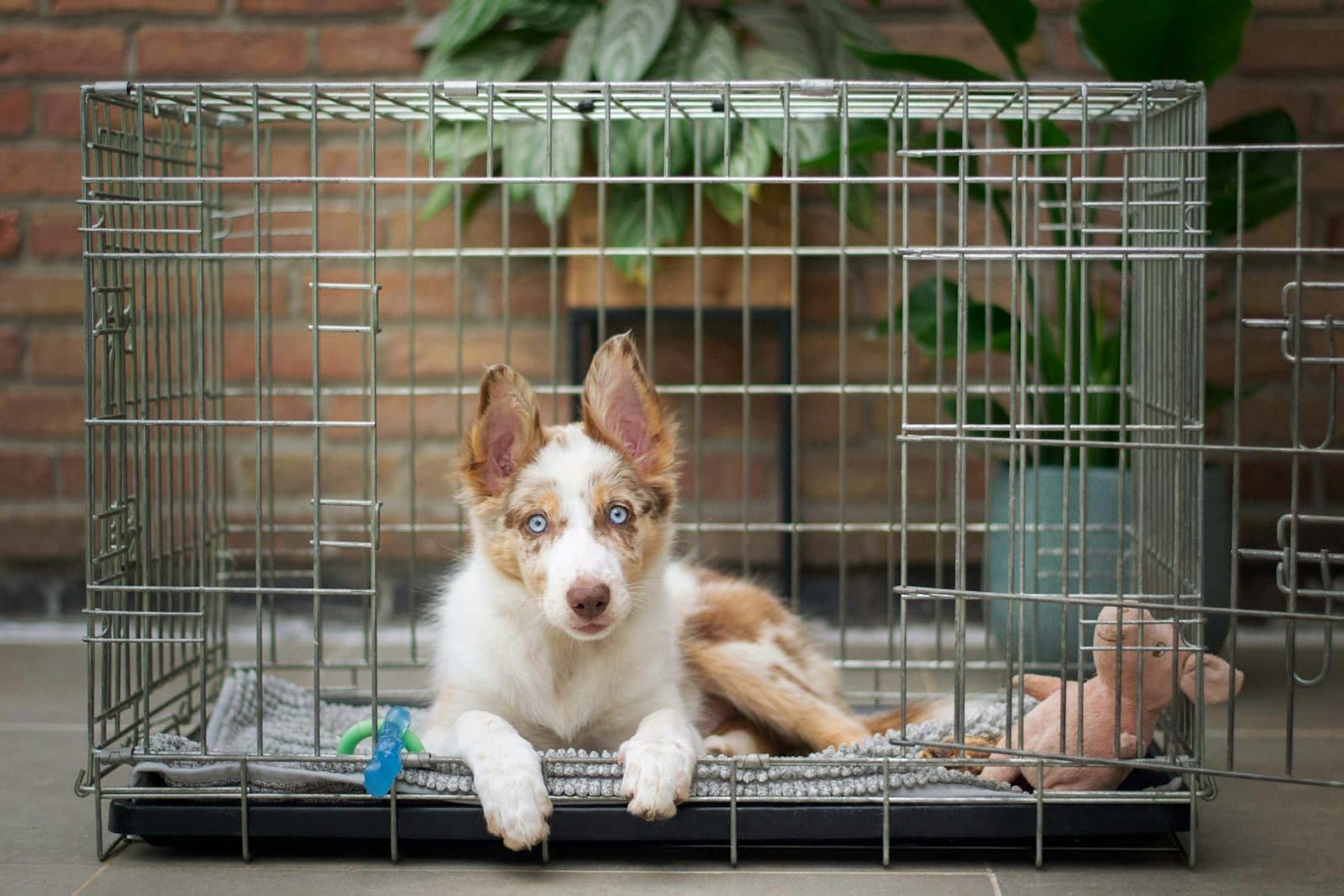
A good crate training schedule starts with short, happy visits to the crate with the door open, then builds up a few minutes at a time until your puppy can rest there calmly while you are out of sight. Young puppies should only stay in for short stretches in the day, from about an hour at 8 weeks to a few hours by 4 months, with a toilet trip and some play after every one.
Used well, a crate is a small, safe bedroom. It gives your puppy a quiet place to nap, keeps them safe when you can't watch them, and helps with toilet training, because most puppies avoid soiling where they sleep. Go at your puppy's pace: a crate they like going into is worth far more than one they put up with.
Choosing and setting up the crate
- Size. Your puppy should be able to stand up, turn around, and lie down comfortably. With much more room, they may use one end as a toilet. For a growing puppy, buy an adult-sized crate and use a divider for now.
- Place. By day, somewhere your puppy can see and hear the family. At night, in or near your bedroom.
- Inside. A washable bed and a safe chew toy. Keep it simple if your puppy shreds bedding.
- Collar off. Take off collars and harnesses before your puppy goes in, so nothing can catch on the wire.
A step by step crate training schedule
Move on only when your puppy is relaxed at the current stage. If they start to struggle, go back a step for a day or two.
| Stage | What you do | Move on when |
|---|---|---|
| 1. Open door | Toss treats in, let your puppy wander in and out, and praise them for going in | They step in happily on their own |
| 2. Meals in the crate | Feed meals in the crate. Close the door while they eat and open it a little later each time | They stay calm for about 10 minutes after eating |
| 3. Short closed-door rests | Give a cue word, reward them for going in, close the door, and sit nearby for 5 to 10 minutes. Then step out of the room for a few minutes | They settle for about 30 minutes, mostly with you out of sight |
| 4. Short absences | Leave the house for a few minutes, with a stuffed chew toy in the crate. Lengthen absences slowly | They stay settled while you are out |
| 5. Nights | Crate near your bed, with a calm bedtime routine | They sleep through, then move the crate if you like |
Keep comings and goings low key, and open the door only after a few seconds of quiet.
How long can a puppy stay in a crate by age?
Young puppies can only wait a short time between toilet trips, so each stay in the crate must be short too. These are typical daytime limits for one stretch, not targets. End every stretch with a trip outside and time out with you.
| Age | Longest daytime stretch in the crate |
|---|---|
| 8 to 10 weeks | About 1 to 2 hours |
| 11 to 12 weeks | About 2 to 3 hours |
| 13 to 16 weeks | About 3 hours |
| 4 to 6 months | About 2 to 4 hours |
Never leave your puppy crated for longer than they can comfortably hold on, and expect breaks to come sooner early in toilet training. If you work away from home, arrange a midday break or use a puppy-proofed pen.
Nights are different. Puppies sleep longer at night, but young ones still need to go out, so keep the crate where you'll hear them.
A sample day with a crate
Here is how a day might look at around 10 to 12 weeks. The times are only an example, so keep the order and shift the times to suit you.
| Time | What happens |
|---|---|
| 6:30 am | Out of the crate and straight outside |
| 7:00 am | Breakfast in the crate, then outside |
| 7:30 am | Play and a short training session |
| 8:30 am | Outside, then a nap in the crate |
| Midday | Wake, outside, lunch in the crate, outside, play, nap |
| Afternoon | Wake, outside, play, a short practice alone in the crate with a chew |
| 5:30 pm | Dinner in the crate, outside, then family time |
| 10:00 pm | Last toilet trip, then bed in the crate |
| Overnight | A quiet toilet trip when your puppy needs one |
Plenty of the day should be spent out of the crate. For the wider routine, see the puppy schedule by age.
Puppy first night in crate crying
Some crying on the first night is normal. Everything is new, and your puppy has just left their litter. Don't introduce the crate for the first time at bedtime. Spend the first day on short, happy stage one visits so it is already familiar.
- Keep the crate beside your bed. Being near you is reassuring, and you'll hear when they need to go out.
- Bring a familiar smell. A blanket or toy from their first home can help them settle.
- Toilet first. Take them out last thing, and again if they wake and cry in the night. Keep night trips quiet and boring: out, a soft word of praise, and back to bed.
- Reassure calmly. If they have been out and are just unsettled, a quiet word or your fingers by the crate door is often enough. Try not to lift them out and start a game.
- Watch for real distress. Brief fussing that fades is part of learning. Pacing, drooling, frantic scratching at the door, or crying that keeps building means the crate has moved too fast. Go back to an earlier stage, and if it continues, talk to your vet.
Mistakes that slow crate training down
- Using the crate as a punishment or a time-out.
- Pushing a reluctant puppy inside.
- Leaving them in for longer than their age allows.
- Crating a dog who panics when left alone. They can hurt themselves trying to get out, so speak to your vet instead.
Keep everyone on the same plan
Crate training goes faster when everyone uses the same cue word, steps, and limits. In Paww, the people who care for your puppy can share the daily routine and leave a quick note for whoever is next, such as when your puppy last went in the crate or out to the toilet.
Crate training and toilet training go together, so pair this guide with the puppy potty training schedule and the puppy sleep schedule. For training ideas, read about small training moments or visit the training page. Still choosing a dog? Browse the breed profiles.
Common questions
How long does it take to crate train a puppy?
Anywhere from a few days to a few weeks, and some puppies need a month or two to feel fully at home.
Should I put a puppy pad or water in the crate?
Advice varies with age, size, and how long the stays are, so ask your vet what suits your puppy.
Should I ignore my puppy crying in the crate?
Not completely. Check whether they need the toilet first. If not, wait for a moment of quiet before you open the door, so they learn that calm brings you back. If crying turns into real distress, go back a step.
Can I crate my puppy while I'm at work all day?
Not for the whole day. A young puppy needs toilet breaks every few hours, plus play and company. Arrange midday visits or use a safe pen.
When can my puppy stop sleeping in a crate?
Once they are reliably clean and don't chew what they shouldn't, try leaving the door open or moving to a bed. Many dogs keep using an open crate as a quiet spot.