LEARN & PLAY
A puppy schedule by age, from 8 weeks
A simple puppy schedule by age, with sample days for 8, 10, and 12 week old puppies and for 4 months, covering meals, naps, toilet trips, and play.
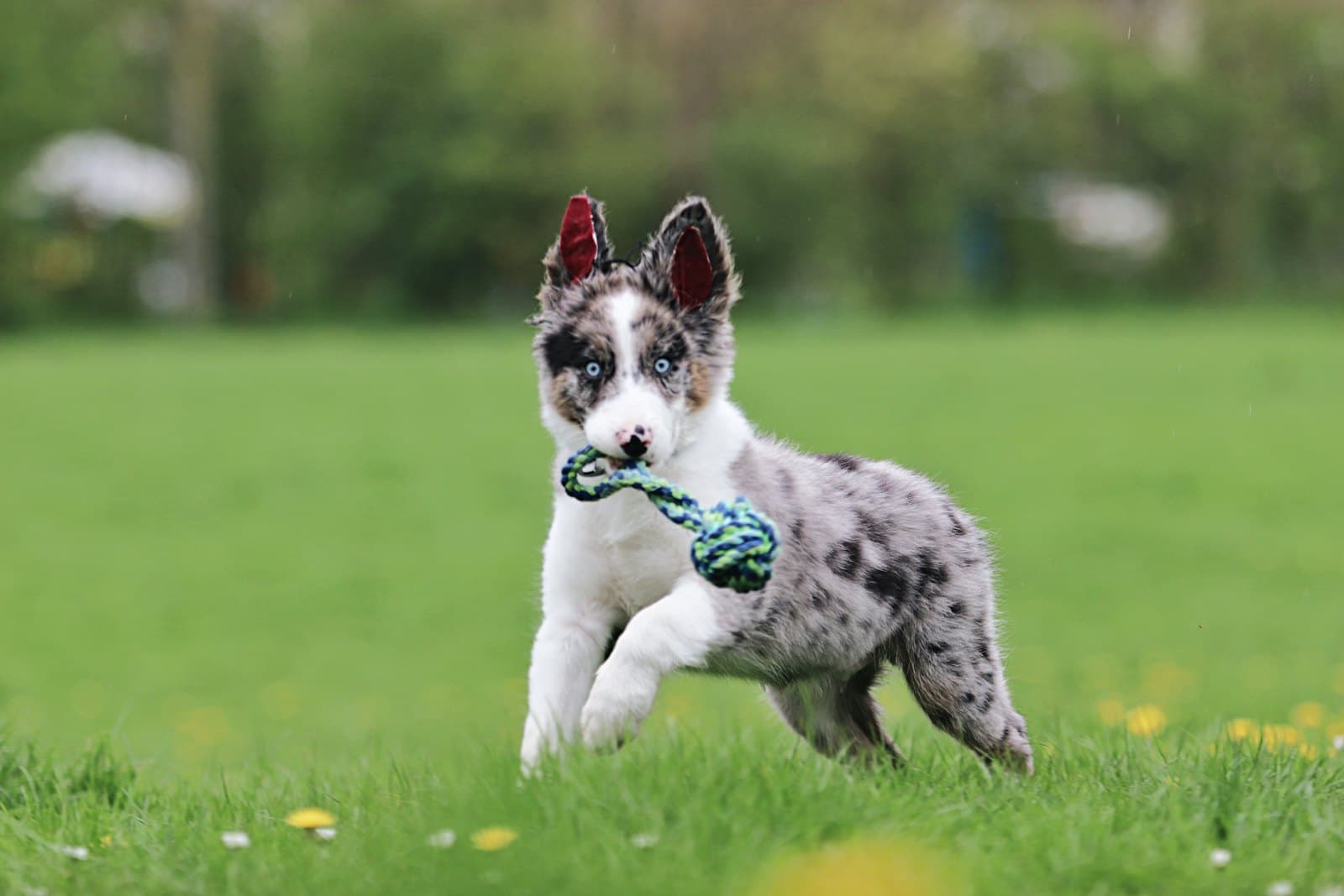
A puppy schedule by age keeps the same simple loop all the way through: toilet trip, food or play, toilet trip, nap. What changes as your puppy grows is the spacing, with fewer meals, longer gaps between toilet trips, shorter naps, and longer nights.
You don't need a new routine every few weeks. You need one routine that you loosen a little at a time. Change one thing at a time, and let your puppy show you they are ready.
Puppy schedule by age at a glance
These are typical patterns, not targets. Puppies of the same age can differ a lot, and breed and size both play a part.
| Age | Meals a day | Daytime toilet trips | Sleep | What's new |
|---|---|---|---|---|
| 8 weeks | Often four small meals | Every 1 to 2 hours while awake | Often 16 to 20 hours in 24, mostly naps | Settling in, learning the house and their name |
| 10 weeks | Often four small meals | Every 1 to 2 hours while awake | Still mostly naps | A few minutes of training at a time, gentle new experiences |
| 12 weeks | Many puppies move from four to three | About every 3 hours | Naps start to shorten. Some puppies begin sleeping through the night | Baby teeth begin to loosen over the next few weeks |
| 4 months | Usually three | About every 4 hours | Longer nights, fewer naps | Teething, more energy, more confidence |
| 6 months | Many puppies move to two at around 5 to 6 months | About every 5 to 6 hours at most | Closer to an adult pattern | Adult teeth are usually in, and adolescence begins |
Whatever the age, add a toilet trip after every meal, nap, and game. For meals, this table shows what is common. Follow the feeding plan you've agreed with your vet, especially for toy breeds and large breeds, whose needs can differ.
8 week old puppy schedule
At 8 weeks, most of the day is sleep. Awake spells are short, and nearly every one of them should start and end with a trip outside. Nights are broken, and in the early weeks you can expect to be up every two to four hours.
The clock times are only an example. Keep the order and move the times to suit your household.
| Time | What happens |
|---|---|
| 6:30 am | Wake up and go straight outside |
| 7:00 am | Breakfast, then outside again |
| 7:30 am | A little play, outside, then a nap |
| Mid-morning | Wake, outside, a meal, outside, short play, nap |
| Afternoon | Wake, outside, a meal, outside, gentle play, nap |
| 5:30 pm | Last meal, then outside |
| 10:00 pm | Last toilet trip, then bed |
| Overnight | A quiet toilet trip when your puppy needs one |
This is a week for settling in, not for a full training plan.
10 week old puppy schedule
A 10 week old puppy follows much the same day, with a little more time awake between naps. Toilet trips still come every hour or two, and meals usually stay as they were.
What you can add:
- Tiny training sessions. A few minutes at a time, several times a day, is plenty. Start with their name, coming to you, and sitting before the food bowl goes down.
- Gentle new experiences. The first three to four months are when puppies accept new things most easily. Let yours hear the vacuum, walk on different floors, meet calm visitors, and ride in the car, always at their own pace.
- Short moments alone. A very short spell in their pen or crate while you are close by, with something to chew, helps them learn that being alone is safe.
Ask your vet when your puppy can walk in public places and meet other dogs. That depends on their vaccinations. Until then, play in a secure garden and carry them when you are out.
12 week old puppy schedule
Around 12 weeks the day starts to open up. Your puppy can usually wait about three hours between toilet trips in the daytime, awake spells get longer, and many puppies drop from four meals to three at around this age.
| Time | What happens |
|---|---|
| 6:30 am | Wake up and go straight outside |
| 7:00 am | Breakfast, then outside |
| 7:30 am | Play and a short training session |
| 8:30 am | Outside, then a nap |
| 11:00 am | Wake, outside, play or a new experience |
| 12:30 pm | Midday meal, then outside, then a nap |
| 3:00 pm | Wake, outside, play and training |
| 4:30 pm | Outside, then a nap |
| 5:30 pm | Dinner, then outside |
| 10:00 pm | Last toilet trip, then bed |
Some puppies begin sleeping through the night at around 3 months, and many take longer. Baby teeth start to fall out at around 3 to 4 months, so chewing often picks up from here. Keep a few safe chew toys within easy reach.
4 month old puppy schedule
A 4 month old puppy has more stamina and more opinions. The daytime gap between toilet trips stretches to about four hours, and most puppies are on three meals.
A typical day:
- Morning: outside, breakfast, outside, then a walk or a game and a short training session, followed by a nap.
- Midday: outside, meal, outside, some quiet time alone with a chew.
- Afternoon: outside, play or training, then a nap.
- Evening: dinner, outside, family time, a calm wind-down, a last toilet trip, and bed.
Build walks up gradually and let your puppy stop to rest when they want to. Long runs, lots of jumping, and other hard exercise can wait until your puppy has finished growing, which takes longer in large breeds. If you are unsure how much is right for your puppy, ask your vet.
Teething is in full swing at this age, so extra mouthing is normal.
What changes around 6 months
By about 6 months the adult teeth are usually all in, and many puppies have moved to two meals a day. Adolescence also begins around now. A puppy who came every time you called may start to act as though they have never heard their name.
That is normal. Keep the routine steady and go back a step when something slips.
Keep everyone on the same schedule
A schedule only works when every person follows it. In Paww, the people who care for your puppy can share the daily routine and leave a quick note for whoever is next, such as when the last meal or toilet trip was.
For the detail behind each part of the day, read the puppy potty training schedule and the puppy sleep schedule. For training, see small training moments or visit the training page. Still choosing a dog? Browse the breed profiles.
Common questions
What is a good daily schedule for a puppy?
One that repeats the same loop through the day: toilet trip, food or play, toilet trip, nap. Fix the wake-up time, mealtimes, and bedtime, and fit everything else around them.
How many times a day should a puppy eat?
Young puppies often have four small meals, many move to three at around 12 weeks, and many are on two by about 6 months. Your vet can tell you what suits your puppy's size and breed.
How long should a puppy be awake between naps?
Not long. Young puppies tire quickly, and at 8 weeks they can sleep for most of the day. If your puppy turns wild or bitey, they probably needed a nap a little earlier.
When can I start training my puppy?
As soon as they come home. Keep sessions to a few minutes, use rewards, and stop while your puppy is still enjoying it.