LEARN & PLAY
A puppy sleep schedule, by age
A simple puppy sleep schedule by age, with a sample day of naps, how much puppies sleep, and how to handle the first night at home.
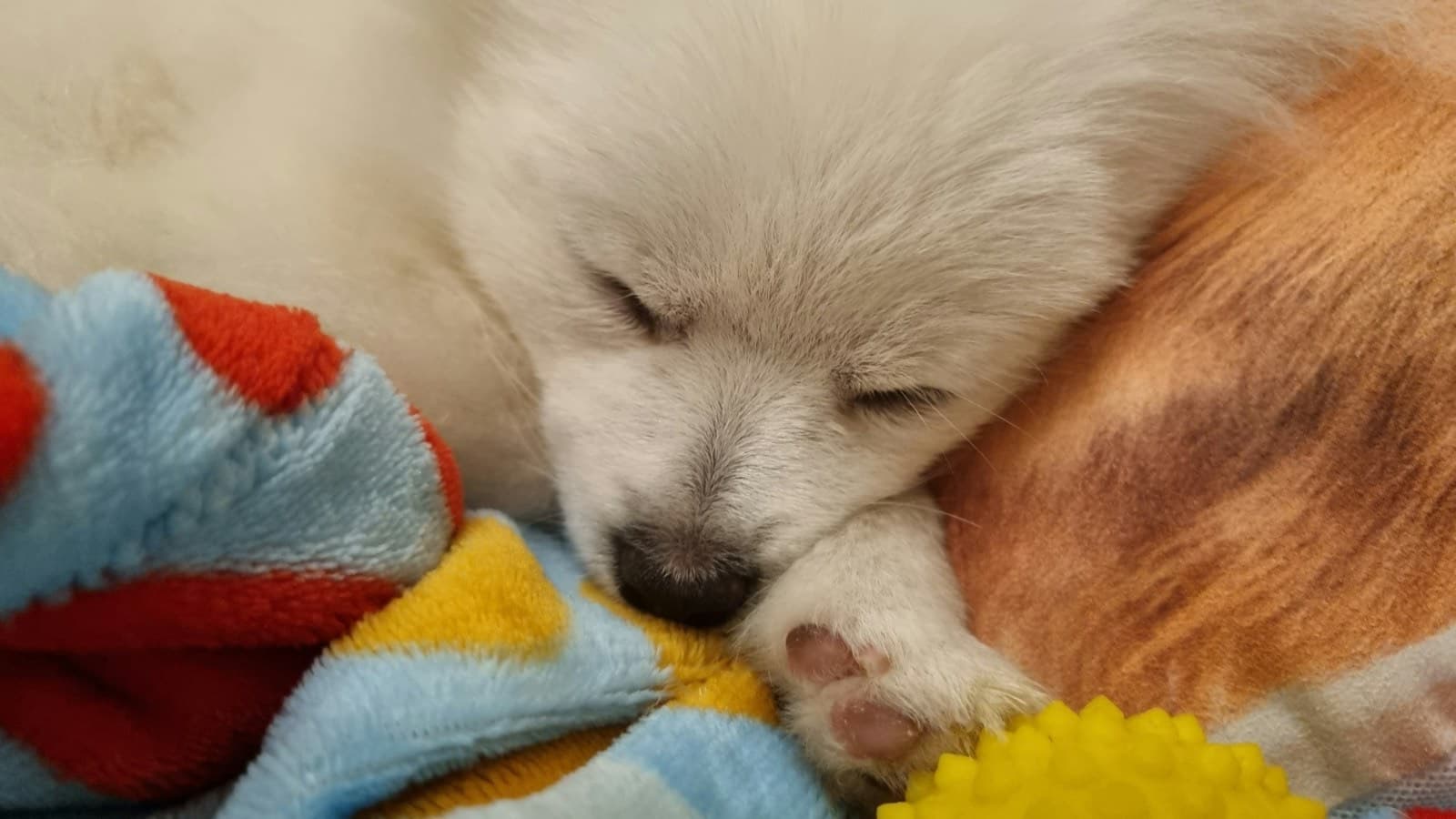
A good puppy sleep schedule follows a simple loop: toilet trip, a short spell of food or play, another toilet trip, then a nap, repeated through the day and closed with a calm, consistent bedtime. Young puppies can sleep up to 18 to 20 hours in every 24, so most of the day is naps.
That can feel like a lot of sleeping. It is normal. Puppies are growing and learning quickly, and rest is when much of that work gets done. Your job is mostly to protect the naps and keep the nights quiet.
How much do puppies sleep by age?
Total sleep is highest in the first weeks at home and eases down as your puppy grows. Individual puppies vary a good deal, so treat these as typical patterns, not targets.
| Age | Sleep in 24 hours | What nights look like |
|---|---|---|
| 8 to 12 weeks | Often 16 to 20 hours, mostly as naps | Broken sleep, with one or more toilet trips |
| 3 to 6 months | Gradually less, but still more daytime sleep than an adult dog | Longer stretches. Some puppies sleep through from about 3 months, and many take longer |
| Adult dog | About half the day | Most sleep happens overnight, with naps in the day |
Young puppies sleep less at night than adult dogs and make up for it in the day. As the months go by, the balance shifts: nights get longer and naps get fewer.
Breed, size, and how busy the day was all make a difference. A puppy who had visitors, a car ride, or a first trip somewhere new will often sleep more afterwards.
A sample puppy sleep schedule
Here is how a day might look for a puppy of 8 to 12 weeks. The clock times are only an example. Keep the order of events, move the times to suit your household, and follow the feeding plan you've agreed with your vet.
| Time | What happens |
|---|---|
| 6:30 am | Wake up and go straight outside |
| 7:00 am | Breakfast, then outside again |
| 7:30 am | Play or a little training |
| 8:15 am | Toilet trip, then a nap |
| Mid-morning | Wake, toilet trip, short play, toilet trip, nap |
| 12:30 pm | Midday meal, then outside |
| 1:00 pm | Short play, toilet trip, then a nap |
| Afternoon | Wake, toilet trip, play or training, toilet trip, nap |
| 5:30 pm | Dinner, then outside |
| 7:00 pm | Family time and gentle play |
| 9:00 pm | Wind down: quiet room, low lights, a chew or a cuddle |
| 10:00 pm | Last toilet trip, then bed |
| Overnight | A quiet toilet trip when your puppy needs one |
The exact bedtime matters less than keeping it the same each night. Pick a time that fits your household and stick to it.
Puppy nap schedule
Puppies don't nap on the clock. They nap after things: after a meal, after a game, after a walk, after meeting someone new. A workable nap schedule simply builds a rest into the end of every active spell.
A few habits make naps easier:
- Keep awake time short. Young puppies tire quickly. Several short play sessions suit them better than one long one.
- Toilet first. A trip outside before each nap helps your puppy settle, and another as soon as they wake keeps house training on track.
- Give them a quiet spot. A crate, pen, or bed away from the busiest part of the house works well. If the house is noisy, move the nap rather than waiting for quiet.
- Let sleeping puppies lie. Ask everyone, especially children, not to wake or handle a napping puppy.
- Stay close at first. Some young puppies settle faster when someone is nearby until they drop off.
Signs your puppy needs a nap
A tired puppy rarely looks tired. More often they look wild. Watch for:
- Sudden racing around the house.
- Biting and mouthing that gets harder and more persistent.
- Pestering for more play when they have already had plenty.
When you see these, lower the energy in the room and guide your puppy to their rest spot. What they need is sleep, not more exercise.
First night with a puppy
The first night is often the hardest. Your puppy has just left their mother and littermates and has probably never slept alone. Some whimpering is normal, and it is usually worry, not naughtiness.
These steps help:
- Sleep close by. For the first few nights, put your puppy's bed or crate in your bedroom, or sleep near wherever their bed will stay. You can move further away a little at a time, every few nights, once they are settling well.
- Decide the long-term plan early. If your puppy will eventually sleep in another room, work towards that gradually instead of making a sudden change later.
- Bring a familiar smell. Ask the breeder or rescue for a blanket or soft toy that smells of your puppy's first home, and put it in their bed.
- Keep the evening calm. Toilet trip, quiet play, a last toilet trip, then lights down. Repeat the same order every night so your puppy learns what comes next.
- Comfort, don't ignore. If your puppy cries, check whether they need the toilet first. If not, settle them with a calm word or a gentle stroke. Leaving a frightened puppy to cry it out tends to make them more anxious, even if they go quiet.
- Make night trips boring. Low lights, no chatting, no play. Out, a quiet word of praise, and straight back to bed.
If your puppy is new to a crate, introduce it slowly with the door open and something nice inside. Don't shut a puppy in a crate for the first time at midnight on their first night.
When do puppies sleep through the night?
Some puppies manage it at around 3 months, and many need longer. In the early weeks, expect to be up every two to four hours.
It often helps to set an alarm and take your puppy out a little before they would wake you. Then the trip happens on your terms, and your puppy isn't practicing crying to get you up. Push the alarm later gradually as your puppy stays dry.
A busy day helps too. Puppies who have had play, short training sessions, and time to explore tend to sleep better than those who dozed from boredom.
Keep everyone on the same schedule
Naps fall apart quickly when one person is putting the puppy down for a rest and another is starting a game. Agree on the routine, the rest spot, and what happens at bedtime. In Paww, the people who care for your puppy can share the daily routine and leave a quick note for whoever is next, such as when the last nap ended.
Sleep and toilet training go hand in hand, so pair this with the puppy potty training schedule. For more, read about sharing your dog's routine and small training moments, or visit the training page. Still choosing a dog? Browse the breed profiles.
Common questions
Is it normal for my puppy to sleep all day?
Yes. Young puppies can sleep up to 18 to 20 hours in a day. If your puppy is hard to rouse, seems flat when awake, or their sleep changes suddenly, ask your vet.
What time should a puppy go to bed?
Any time that suits your household, as long as it's the same each night. A regular bedtime with the same calm routine before it helps your puppy settle.
Should I ignore my puppy crying at night?
No. Check whether they need the toilet, then comfort them calmly with as little fuss as you can. Puppies grow more confident about sleeping alone when they feel safe.
Should my puppy sleep in my bedroom?
For the first few nights, having your puppy's bed in your room, or sleeping near theirs, helps them settle. After that it's your choice. Make any move gradually.
Why does my puppy go wild in the evening?
Evening zoomies and extra nipping are often signs of an overtired puppy. Try a calmer wind-down and an earlier rest instead of more play.